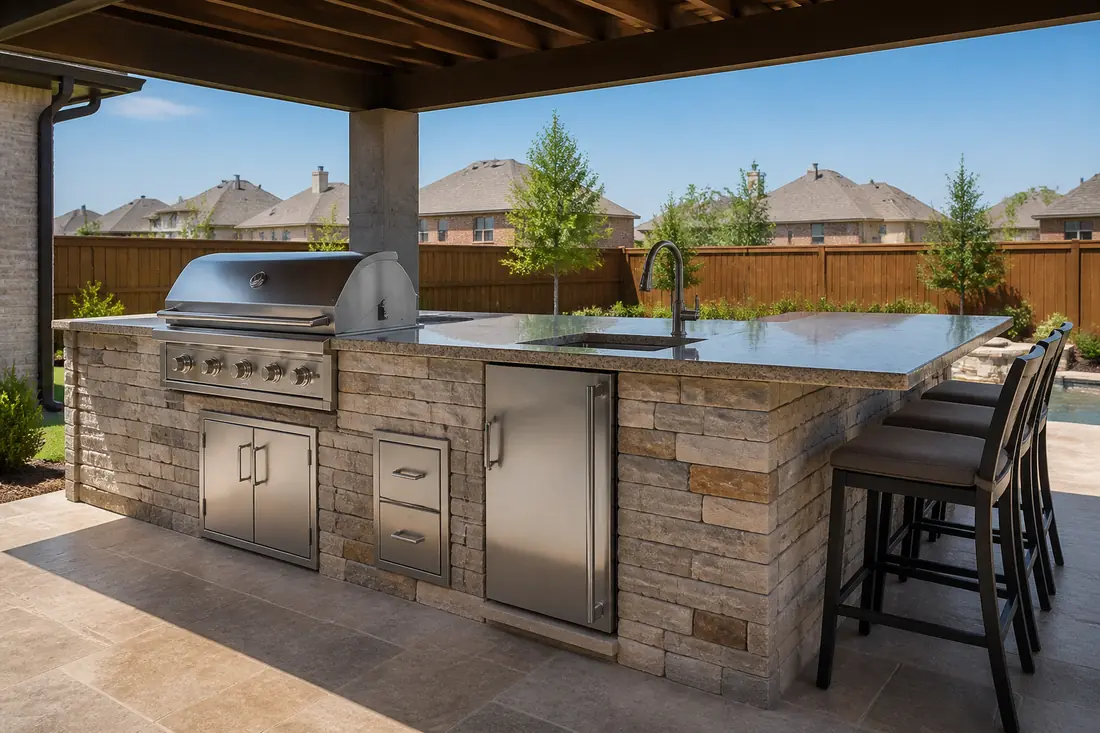
Outdoor Kitchen Construction
Full outdoor kitchens — base, masonry, counters, appliances and services — built as one project rather than assembled from parts.
Free estimateDetails
Built-in grills, outdoor kitchens and covered living space built for North Texas heat, hail and Blackland clay.
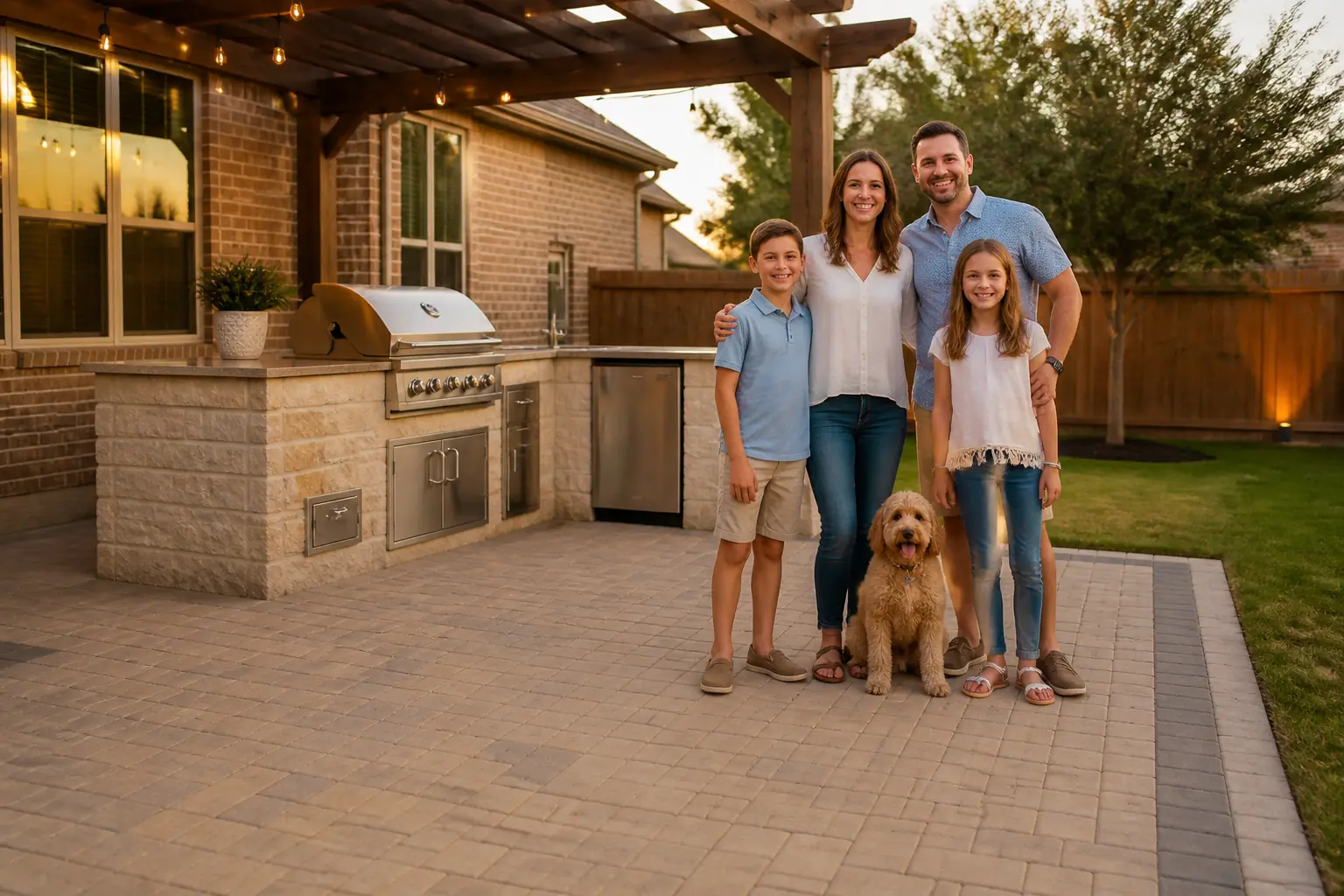
Built-in grills, outdoor kitchens and covered living space built for North Texas heat, hail and Blackland clay.
Mon–Fri 7:00am – 6:00pm · Sat 8:00am – 3:00pm · Sun Closed
Straight through to a person, not a phone tree.
Tell us what is going on and we will get back to you with the next step.
Built on a base that suits Blackland clay
The soil here swells and shrinks with moisture, and a masonry kitchen set on an inadequate base moves with it. What the structure sits on gets decided before anything about the appliances does.
Gas, power and water planned before the block goes up
Running services after a kitchen is built means cutting into what was just finished. Where the lines come from and how they get there is settled at design, not discovered at installation.
Materials chosen for a North Texas summer
Dark stone reaches temperatures that make a counter unusable in August, and some finishes fade under this sun far faster than a showroom sample suggests. Material choice gets talked about in those terms.
HOA and permitting handled as part of the job
Most of the master-planned communities here have architectural review, and gas and electrical work is permitted. Which approvals apply is established before a scope is priced.
Built-in grills, outdoor kitchens and covered living space built for North Texas heat, hail and Blackland clay.
An outdoor kitchen is a small building with plumbing, gas and power in it, and most of what determines whether it lasts happens before anything visible goes up. What it sits on, how services reach it, and how water gets away from it decide more than the appliance brands do.
On Blackland Prairie clay that base question is not a formality. The soil here changes volume with moisture through the year, and a masonry structure set on a slab that was not designed for that movement cracks at the joints and takes the countertop with it. That is the single most common reason an outdoor kitchen looks wrong three years in.
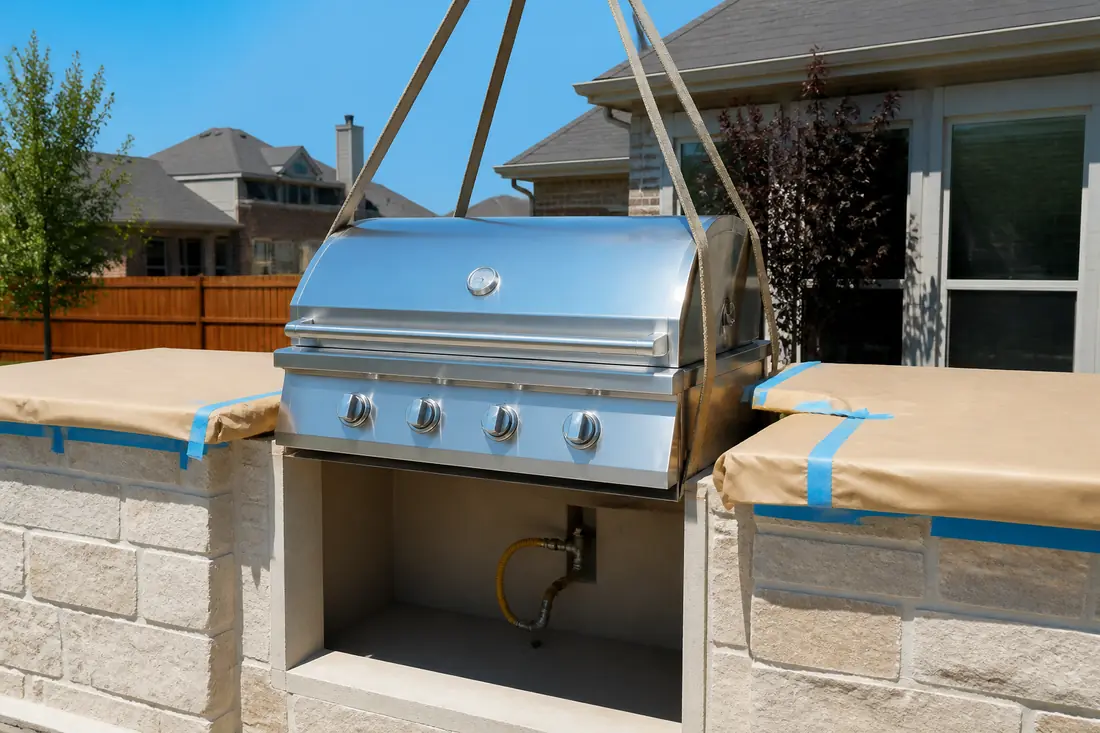
A built-in grill is a gas appliance set into combustible-adjacent construction, and the parts that matter are the ones nobody sees: the clearances around the firebox, the ventilation in the enclosure, and the gas line that feeds it. Those are also the parts that get skipped when a grill is dropped into an opening built to a guess.
Opening dimensions come from the specific appliance. Manufacturers differ on cut-out size, on required clearance behind and below, and on venting, and a masonry opening is not something that can be adjusted afterwards.
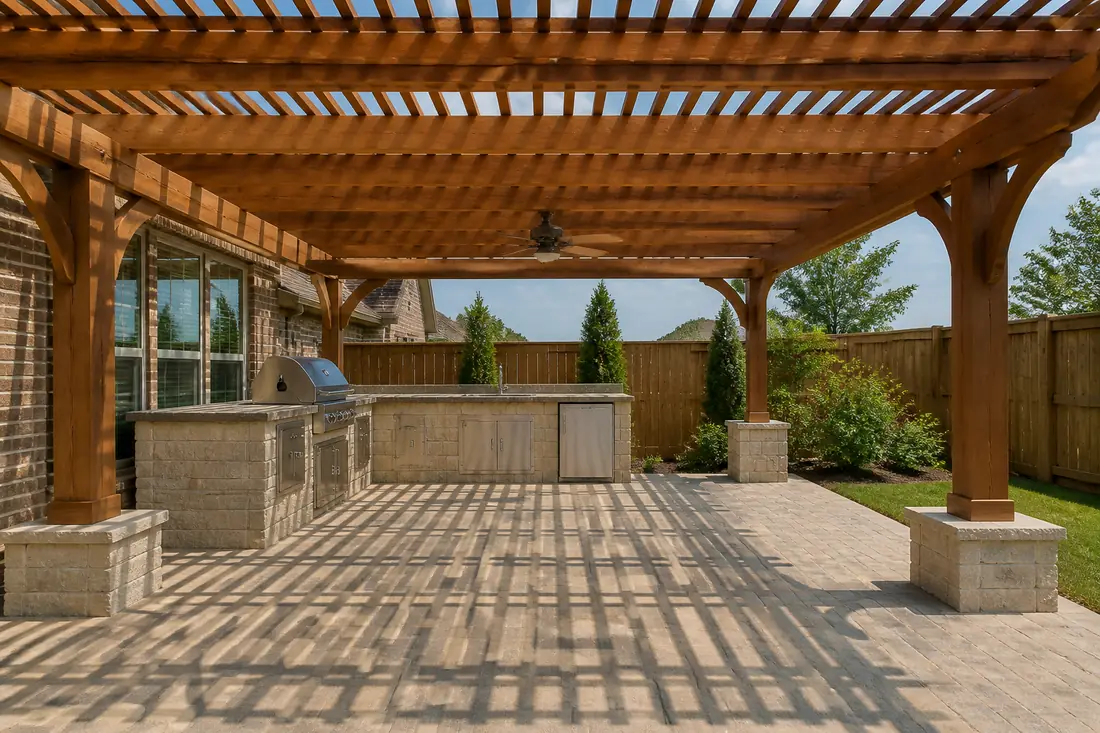
Shade is what makes an outdoor kitchen usable here for more of the year. It also changes the kitchen underneath it: a grill under a solid roof needs ventilation, counter color matters less out of direct sun, and cabinetry sees a gentler exposure.
A cover is a structure. It carries wind uplift and, in this part of Texas, hail, and it is generally permitted and attached to the house — which makes how it ties in and how water is handled at that junction part of the design rather than a detail.
Most of what goes wrong with an outdoor kitchen was decided at layout. A grill positioned where the prevailing wind carries smoke at the seating, a counter too narrow to work on, a fridge whose door fouls the corner — none of those are construction faults and all of them are permanent once built.
Design also settles what the project will cost before anyone commits to it. Services routing, base requirements and appliance selection account for most of the budget, and they are cheaper to change on paper than in masonry.
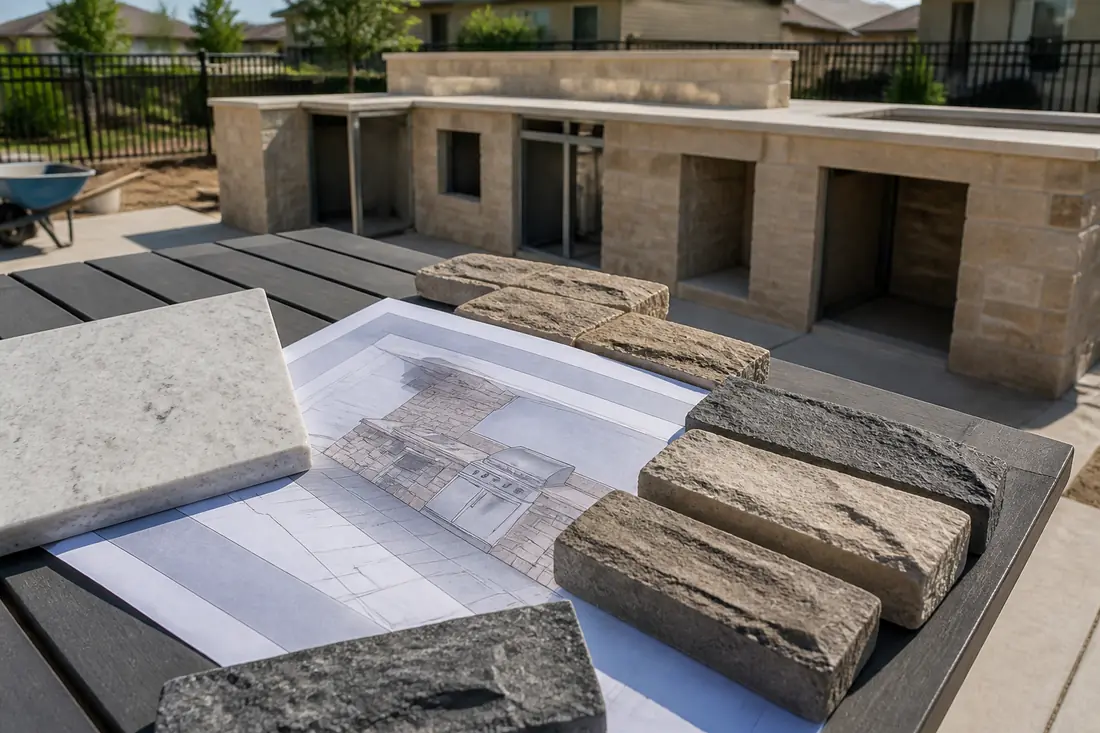
Full outdoor kitchens — base, masonry, counters, appliances and services — built as one project rather than assembled from parts.
Full outdoor kitchens — base, masonry, counters, appliances and services — built as one project rather than assembled from parts.
Layout, materials and services planned on paper before anything is priced or built.
Grills, side burners and ventilation built into masonry, with the gas run and the clearances done properly.
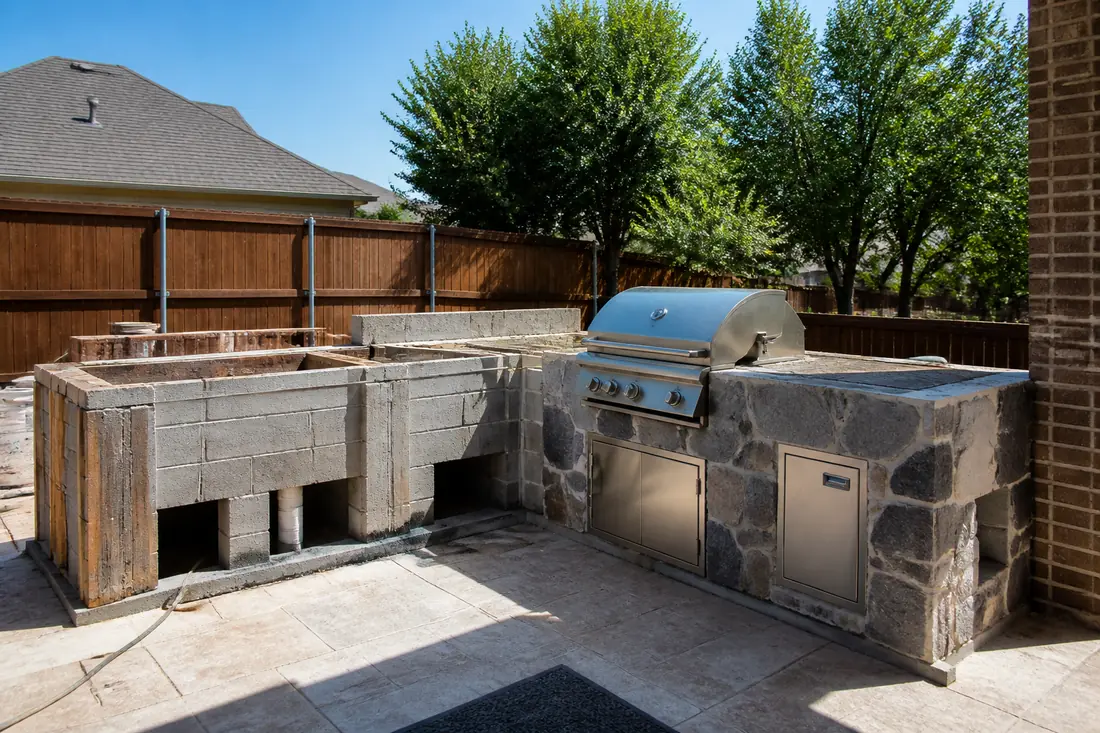
Updating existing outdoor kitchens — appliances, counters, doors and finishes — on a structure that is sound.
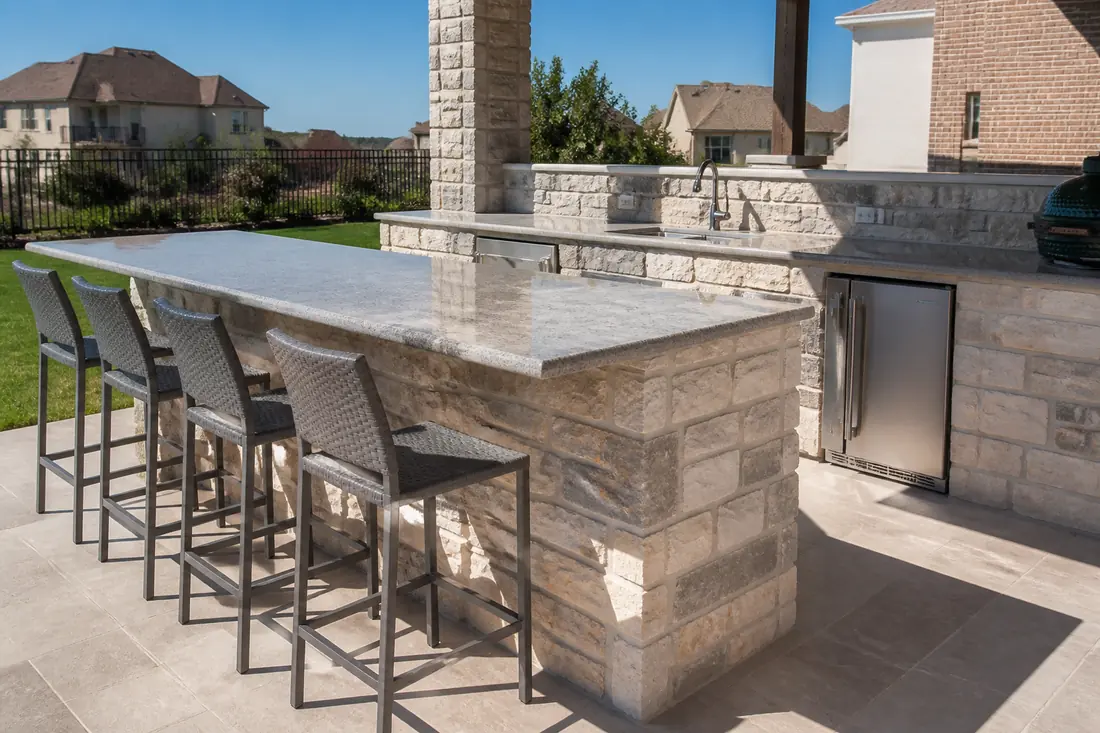
Bar seating, serving islands and standalone counter runs, with the clearances that make them usable.
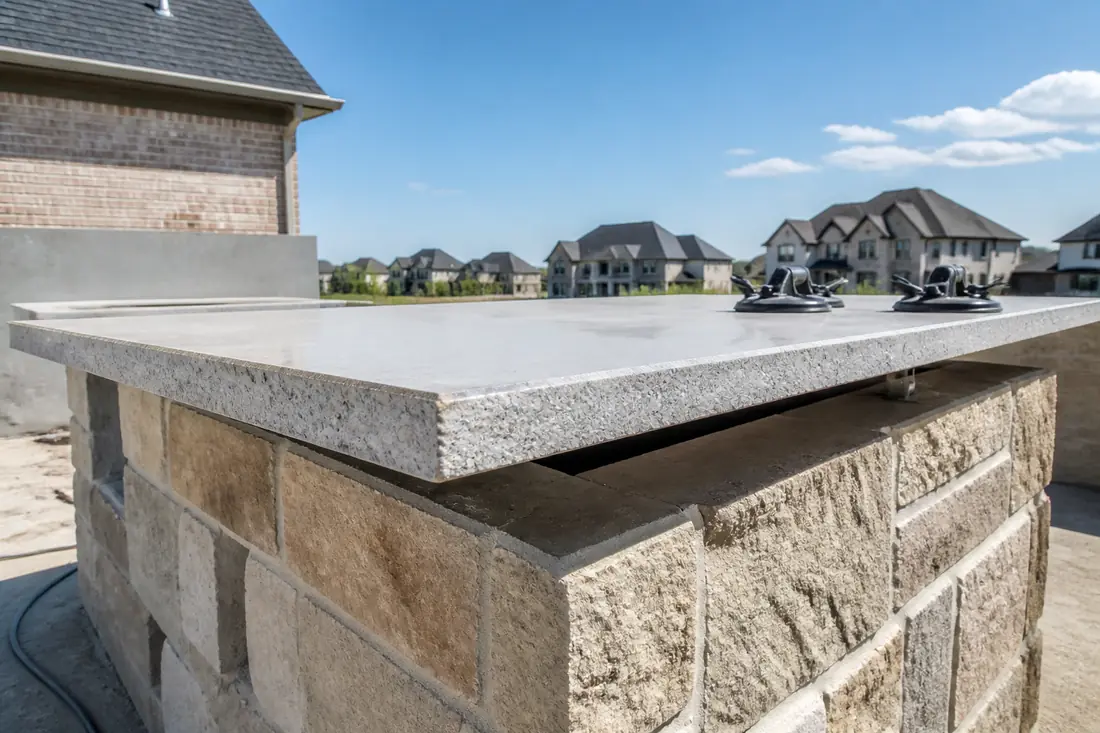
Counter surfaces selected and templated for full sun, heat and North Texas weather.
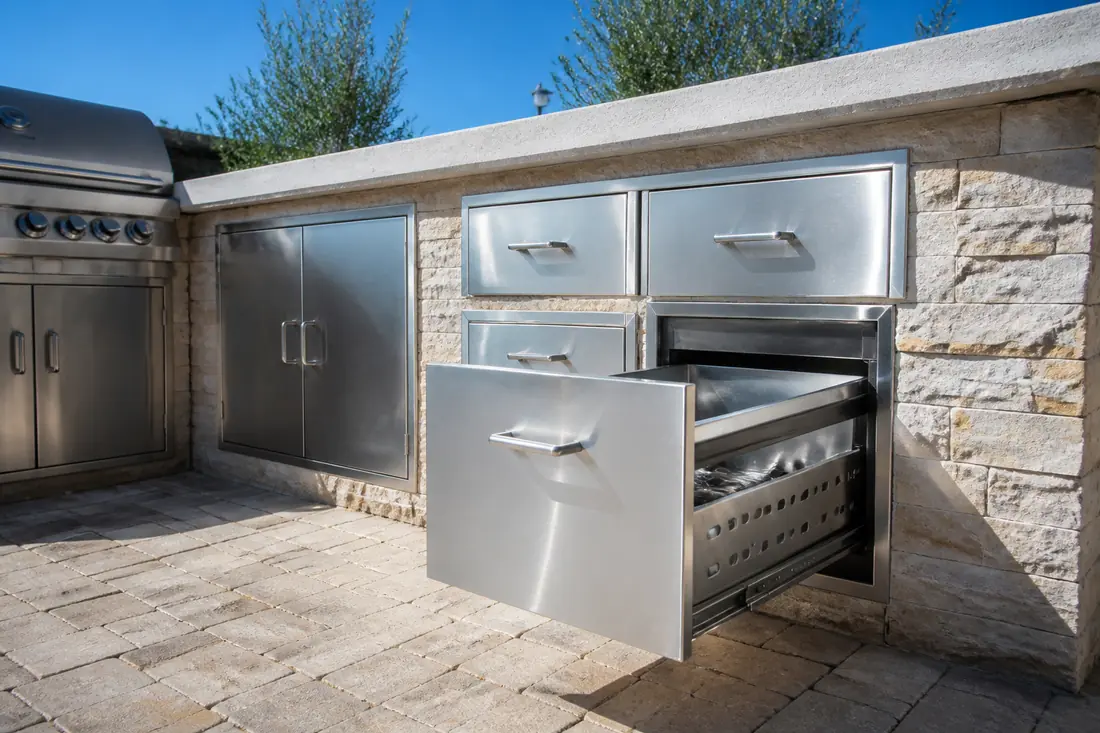
Doors, drawers and storage built to survive outdoors, in materials that do not pit, swell or seize.
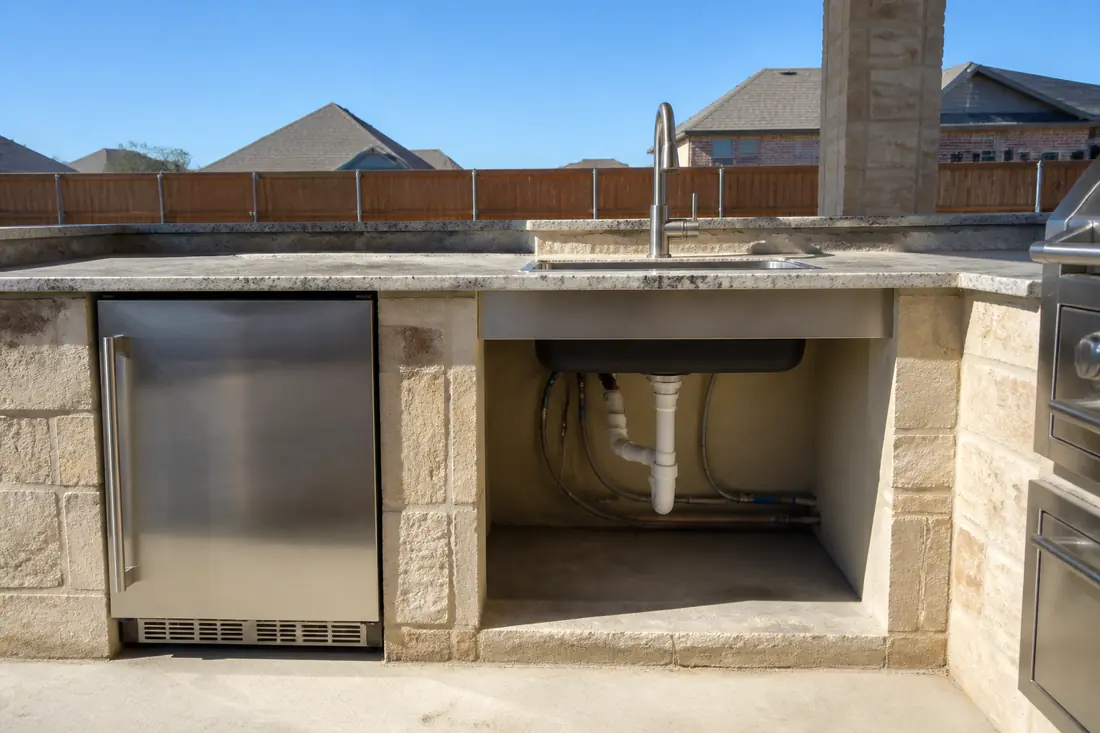
Refrigeration, ice makers and sinks, with the water, drainage and freeze protection they need here.
Shade and cover over an outdoor kitchen or living space, engineered for wind and hail loading.
Shade and cover over an outdoor kitchen or living space, engineered for wind and hail loading.
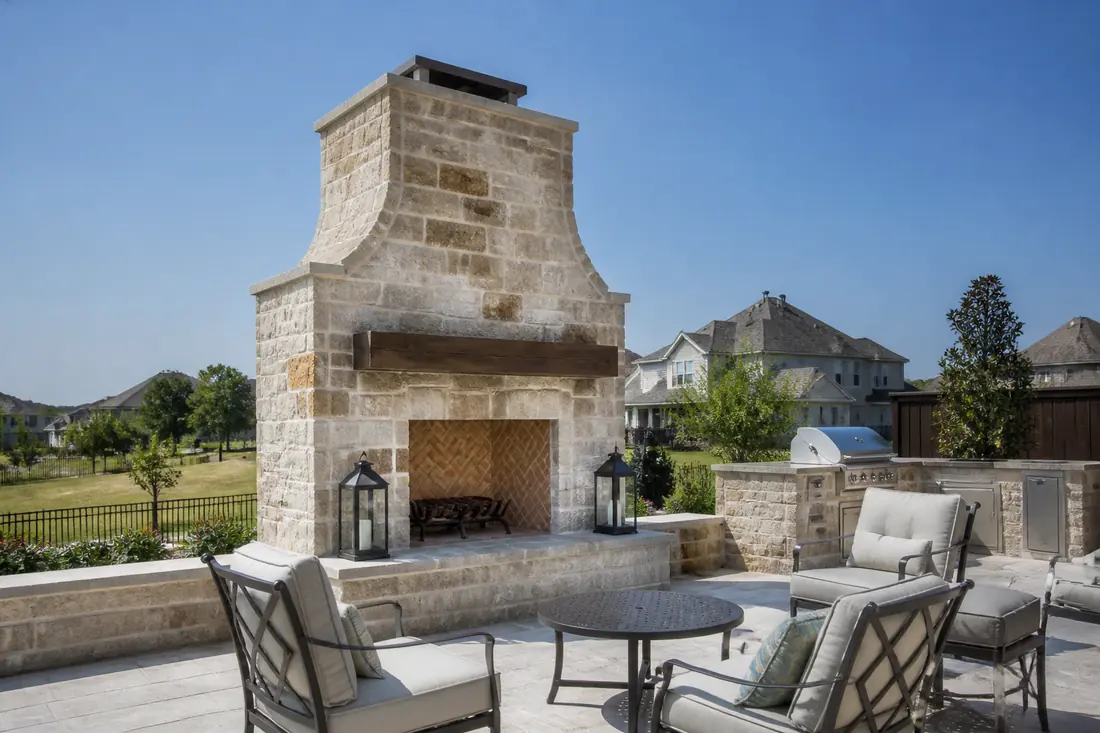
Masonry and gas fireplaces built with the flue, clearances and footing the structure actually needs.
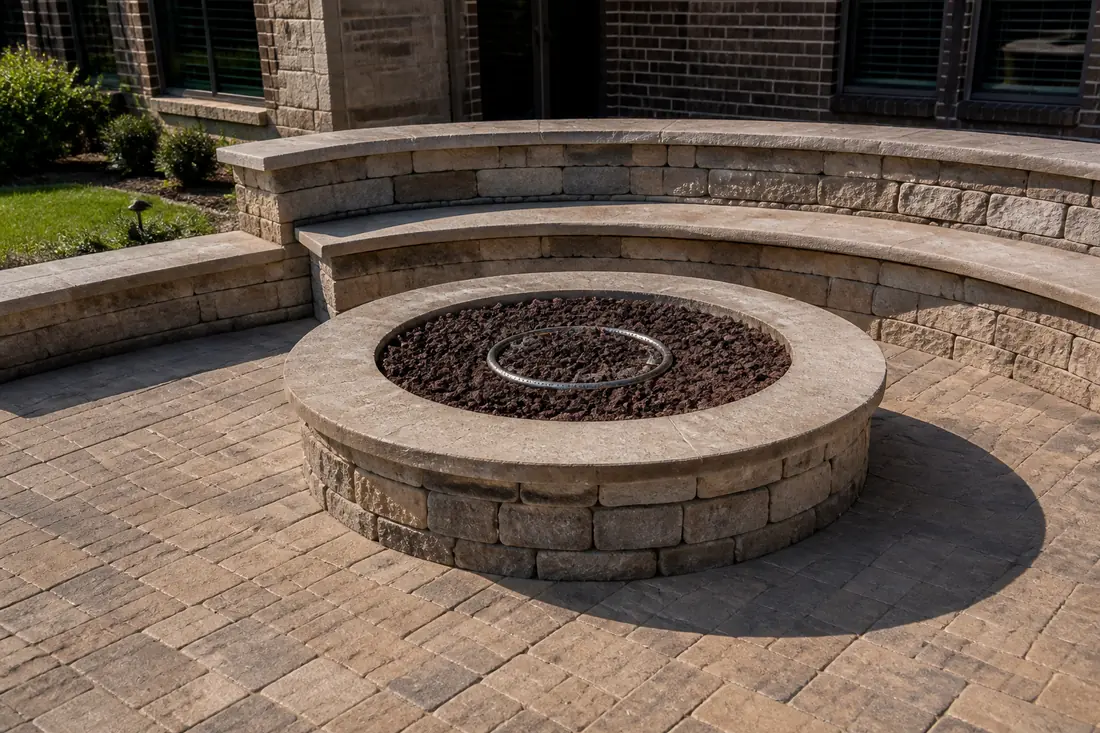
Built-in gas and wood fire pits, fire tables and features, with clearances and gas runs done properly.
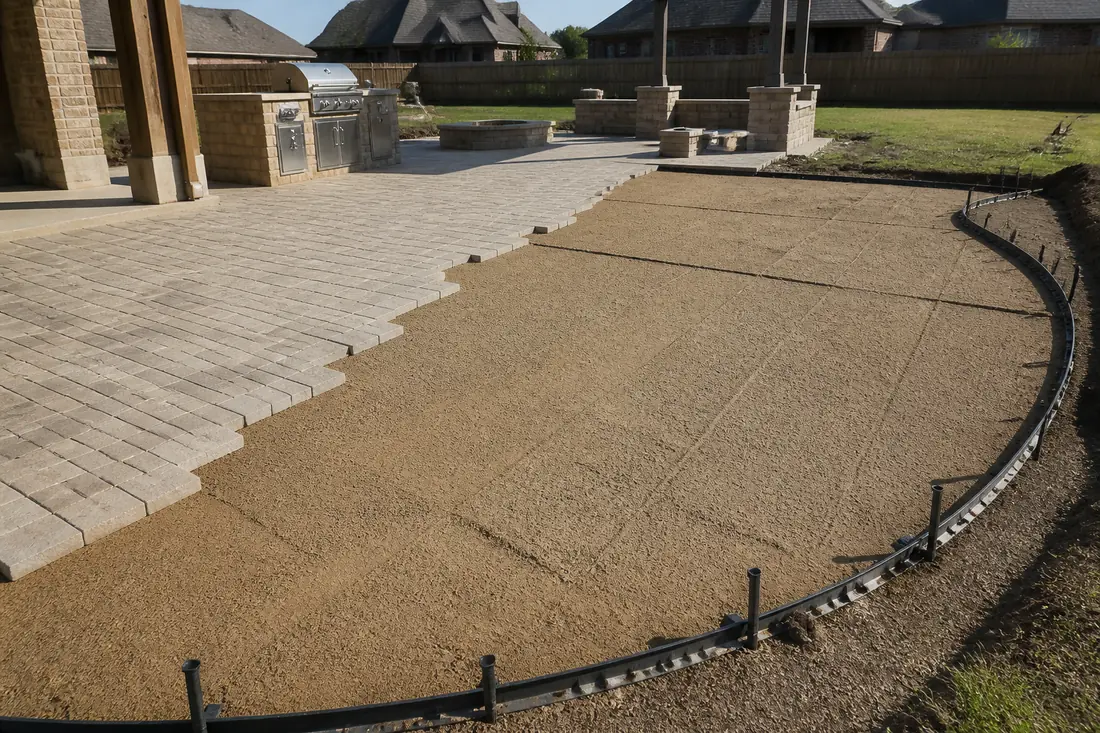
The surface an outdoor kitchen sits on and the space around it, built with base and drainage for this soil.
Running and sizing the gas that feeds a grill, fire feature or heater, by the licensed trade.
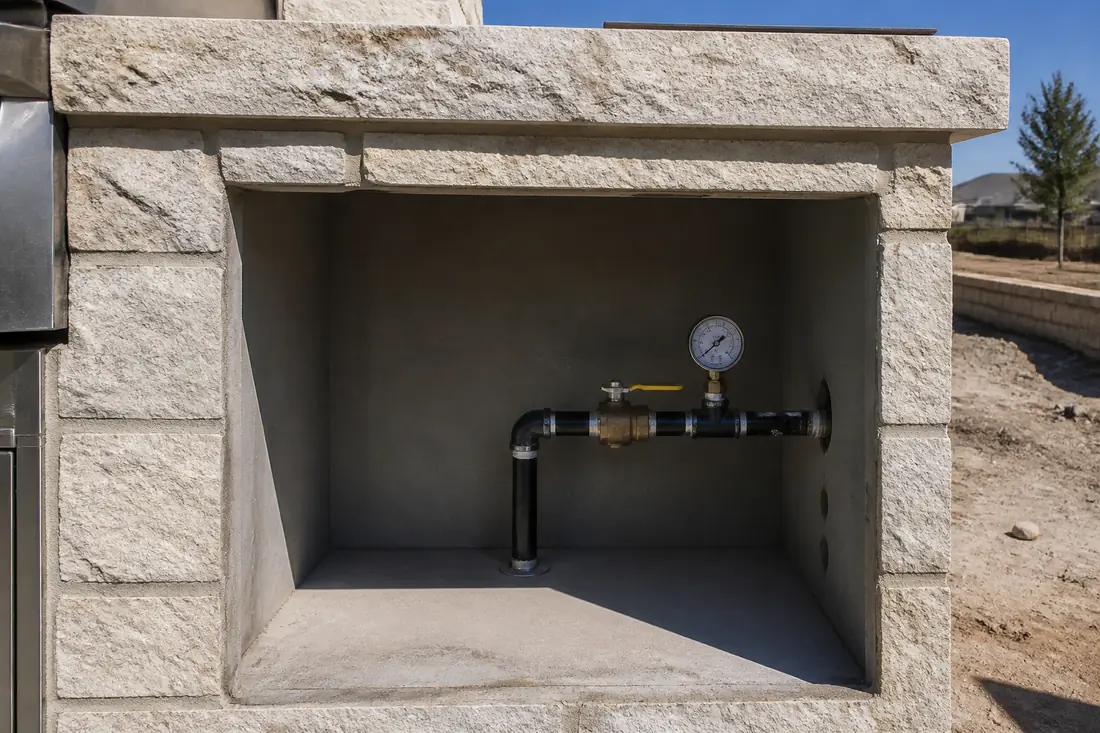
Running and sizing the gas that feeds a grill, fire feature or heater, by the licensed trade.
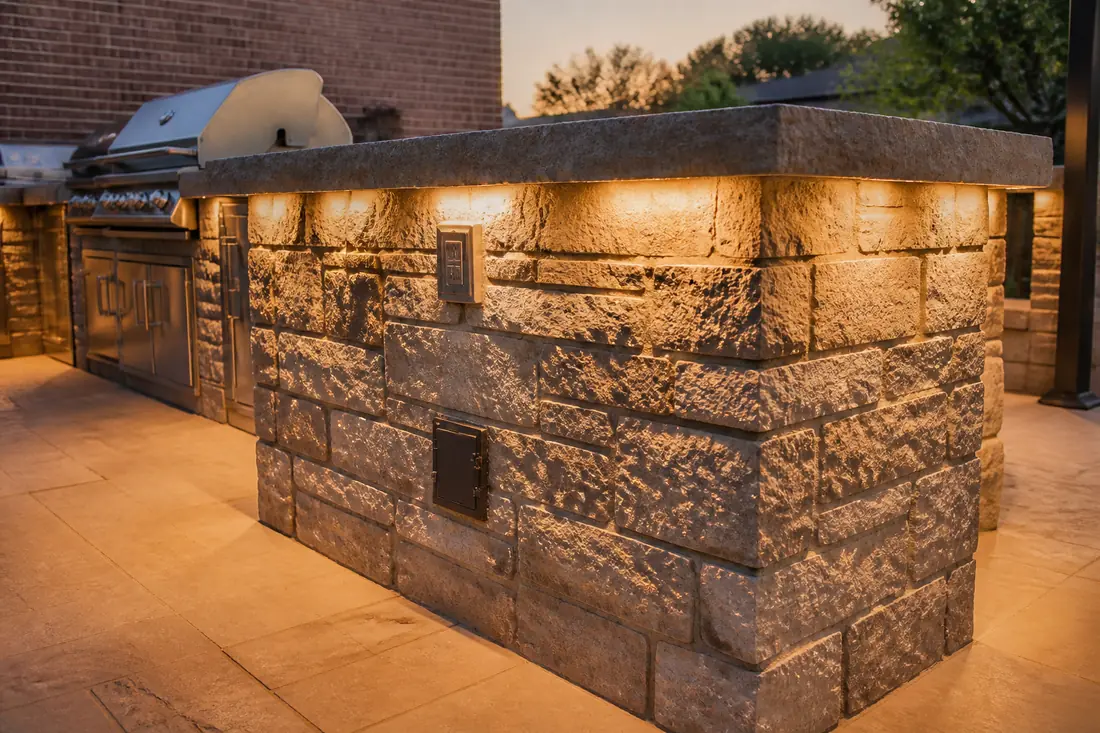
Circuits, outlets and task lighting for an outdoor kitchen, installed to the requirements for wet locations.
Outdoor kitchens and grilling stations for amenity decks, clubhouses, apartment communities and hospitality.
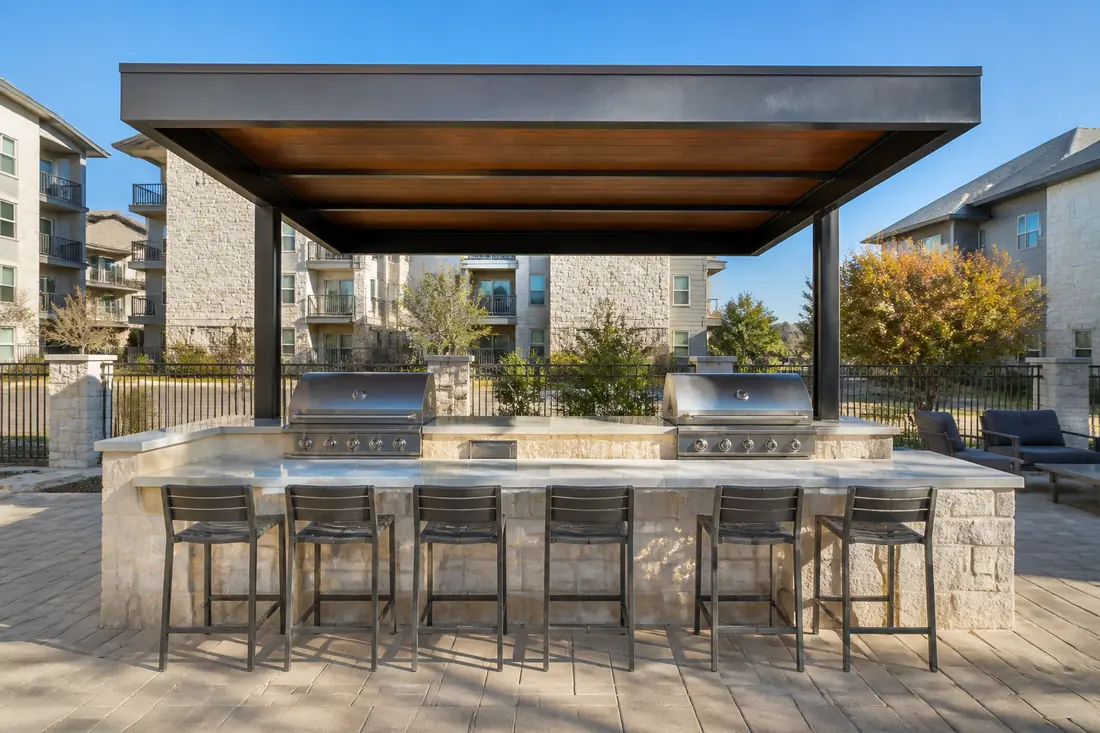
Outdoor kitchens and grilling stations for amenity decks, clubhouses, apartment communities and hospitality.
Every service we offer, and what the work actually looks like.
Your request is read and sorted by urgency rather than dropping into a queue. Marking the job urgent on the form changes how quickly it gets looked at.
Work of this kind is assessed in person rather than quoted from a phone description, so the scope and the price are both settled before anything starts.
You see the options and the cost before any work starts, and a cheaper repair that genuinely solves the problem should be presented alongside the bigger one.
Removed material is hauled away and the site left clean. Cleanup belongs in the job rather than being an extra you have to ask for.
If any of this looks like your property, it is worth getting eyes on it before the next wet season.
Usually the base rather than the masonry. Blackland clay changes volume with moisture, and a structure set on a slab that was not designed for that movement cracks where the panels meet.
Dark stone in full North Texas sun reaches temperatures that make a surface genuinely unusable in August. Color and shade get decided together for that reason.
Standard stainless does not hold up outdoors here, and sprinkler overspray accelerates it. Marine-grade costs a little more and lasts considerably longer.
Commonly an undersized gas line rather than a faulty appliance. A line sized for one grill will not carry a grill, a side burner and a fire pit running together.
A layout decision rather than a grill problem, and permanent once the masonry is up. Where the wind usually comes from is worth ten minutes at design stage.
Outdoor plumbing that could not be drained down. Recent winters have made this a real concern here, and repairing a split inside finished masonry means opening the structure.
The structure underneath is masonry whichever finish goes on it. What differs is cost, how it weathers in full sun, and how closely it ties the kitchen to the house.
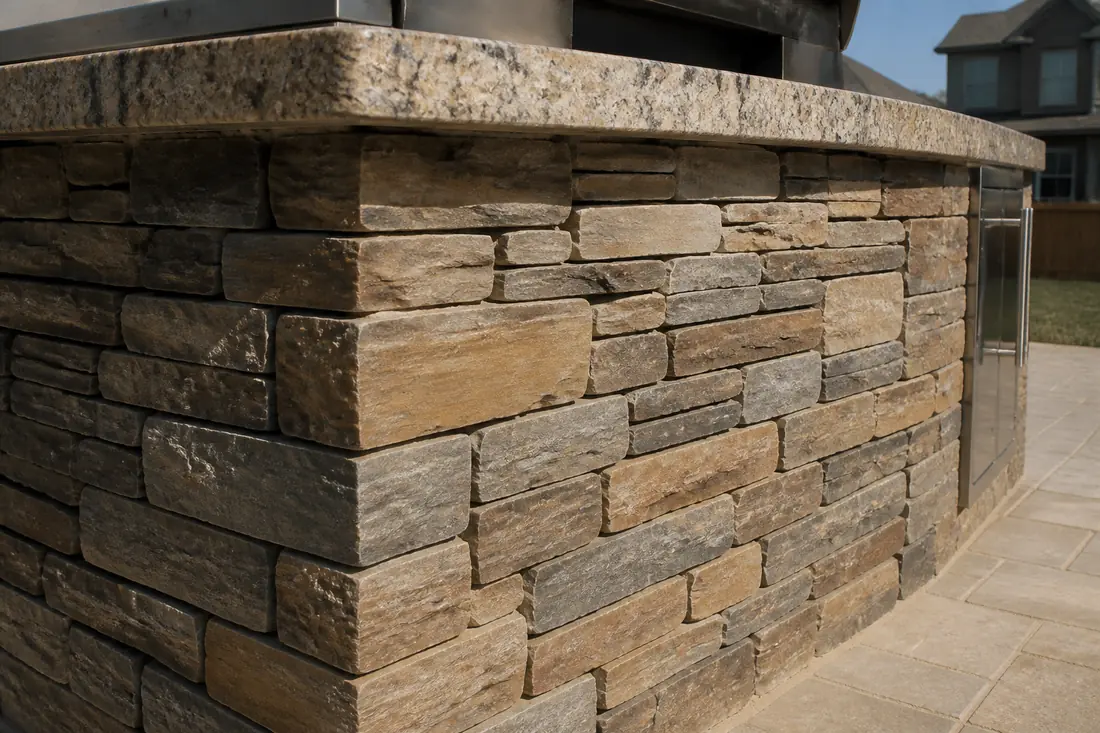
Cut stone over a masonry core. It weathers well in this climate, hides the odd knock, and ties an outdoor kitchen to a brick or stone house without needing to match exactly. The most expensive cladding of the common options and generally the longest-lived.
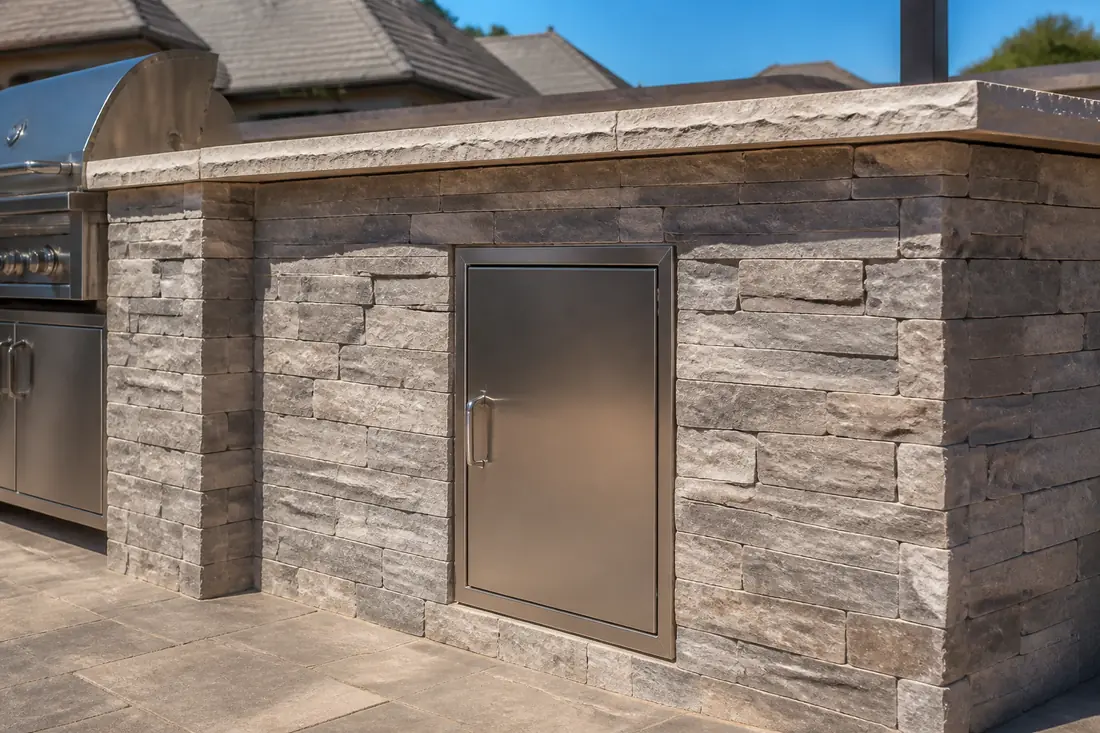
Cast units that install faster and cost less than natural stone, in consistent sizes and colors. The trade-off is that color is applied rather than inherent, so long-term appearance depends more on the product quality and on how much direct sun it takes.
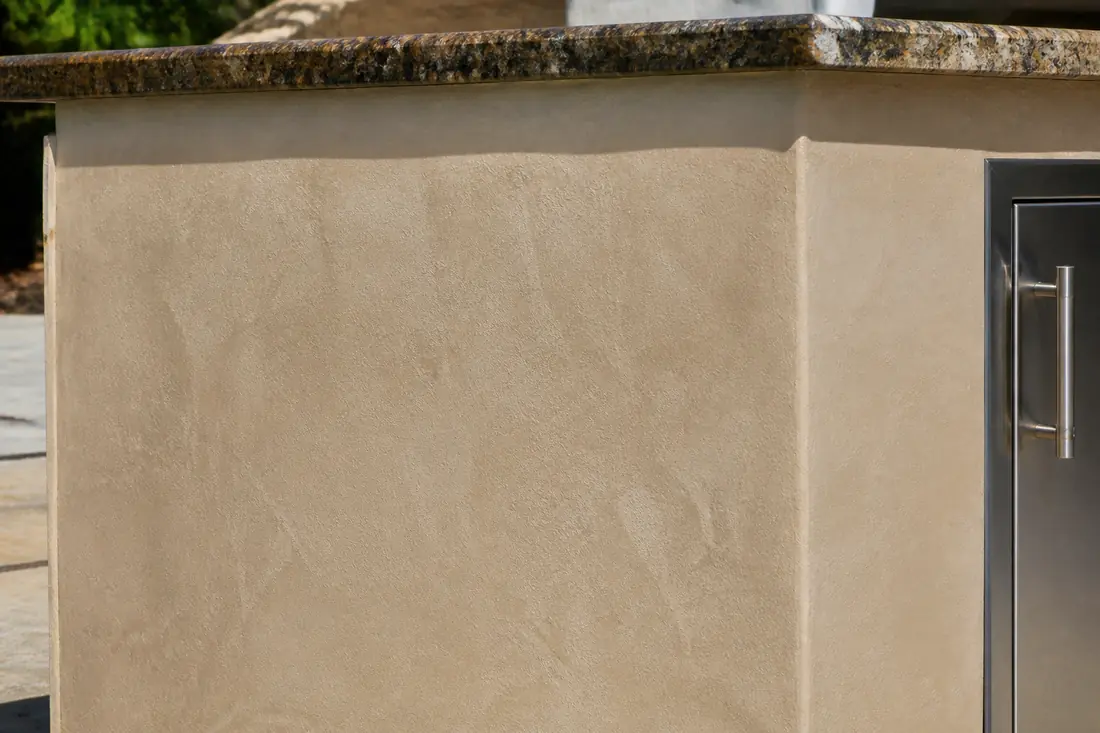
A troweled finish over the masonry structure, which suits contemporary designs and is the least expensive cladding here. It takes color well and is straightforward to repair, but shows movement cracks more readily than a jointed cladding does.
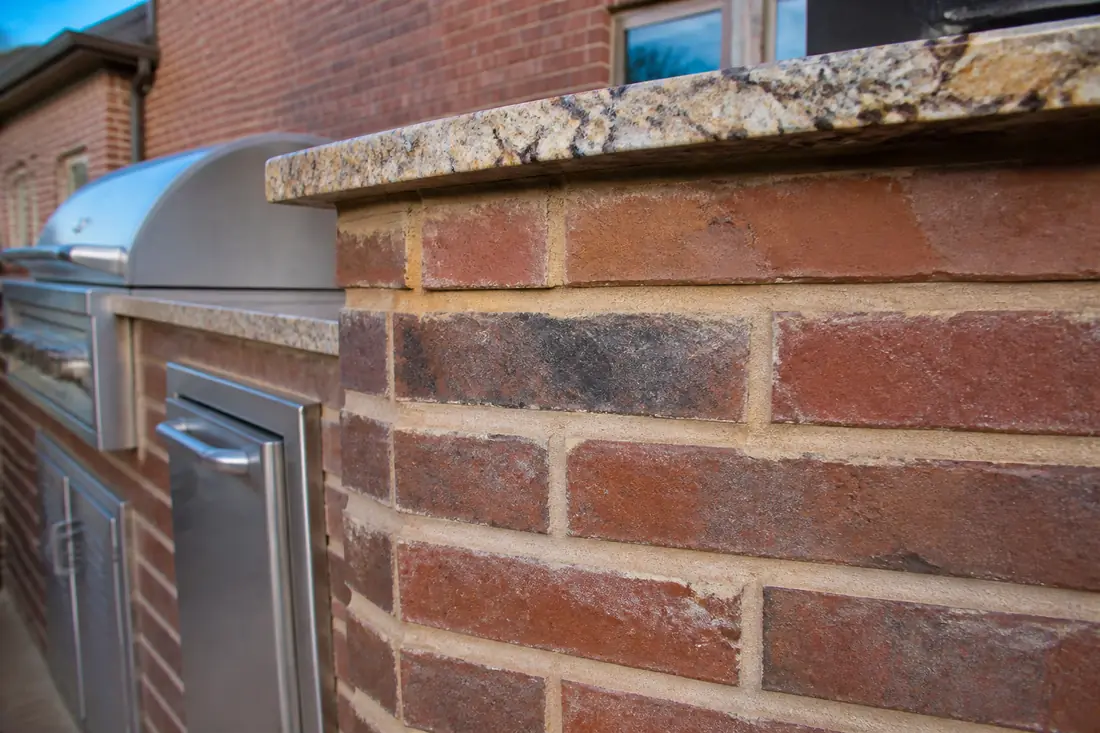
Matches most of the housing stock here directly, which is why it remains a common choice. Durable and familiar, with the caveat that matching an existing house brick exactly is rarely possible once the original has weathered for a decade or more.
The gas code writes its appliance rules around a room. A built-in grill island is not one, and that changes the shutoff valve, the connector and what may pass through the island wall.
Read the guide →The flexible gas line feeding a built-in grill carries a bonding rule with a distance in it, and one CSST segment added to an all-steel house brings the whole system under that rule.
Read the guide →Add a roof and enough walls and a grill island crosses a line in the mechanical code. What the 400 cfm makeup air trigger means, and why it turns on a phrase about air barriers.
Read the guide →12 cities and the communities around them. Not sure if you are covered? Call and ask — we will tell you straight.
Starwood · Newman Village · Phillips Creek Ranch · Panther Creek
75033, 75034, 75035, 75036
West Plano · Willow Bend · Kings Ridge · Deerfield
75023, 75024, 75025, 75093
Stonebridge Ranch · Craig Ranch · Adriatica · Historic Downtown
75069, 75070, 75071, 75072
Whitley Place · Windsong Ranch · Star Trail · Lakes of La Cima
75078
Light Farms · Mustang Lakes · Sutton Fields
75009
Frisco Lakes · Union Park · Sunset Pointe · Paloma Creek
75068
Austin Ranch · The Tribute · Stewart Peninsula
75056
Twin Creeks · Bethany Lakes · Watters Crossing
75002, 75013
Castle Hills · Highland Village · Lake Park
75056, 75067, 75077
Josey Ranch · Rosemeade · Country Place
75006, 75007, 75010
Silverado · Sandbrock Ranch · Winn Ridge
76227
Liberty · North Creek · Milrany Ranch
75454
It varies widely, and the two things that move the number most are not the ones people expect. The gas and electrical routing is often the largest single variable, because distance from the meter and panel to where the kitchen goes can differ enormously between two similar-looking layouts. The second is the base, since this soil frequently means the structure needs more underneath it than an existing patio provides. Appliance selection matters too, but it is easier to adjust than either of those.
The construction is usually the shorter part. Design, appliance lead times, HOA architectural review and permitting commonly account for more of the calendar than the work on site, and review timelines vary between communities. A realistic program can be given once the approvals position and the appliance availability are known — before that, any date would be a guess.
In most of the master-planned communities here, some form of architectural review applies, and it can cover structures, rooflines, materials and colors rather than just size. What is required varies considerably between communities. It is established at design stage, since finding out later can mean redrawing a plan that had already been agreed and priced.
Often, but the existing slab is a question rather than a given. What matters is its thickness, what it sits on, and whether it has already moved — a surface poured for foot traffic is not necessarily one that will carry masonry and appliances without cracking. That gets assessed first, and where it will not serve, building an adequate base becomes part of the project rather than a surprise partway through.
The masonry and appliances are generally fine; water lines are the exposure. Recent winters here have made that a practical rather than theoretical concern, and any outdoor plumbing needs to be drainable or protected. A split line inside finished masonry means opening up the structure to reach it, so it is designed in from the start rather than managed afterwards.
That is a fair question and the honest answer depends on the build. Shade and a fire feature extend the usable season here substantially in both directions, which is why cover and a fire pit are often better value than an additional appliance. A kitchen usable only on mild evenings gets used less than people expect when they are planning it in spring.
Call (940) 289-7742 or request a callback — whichever is easier.