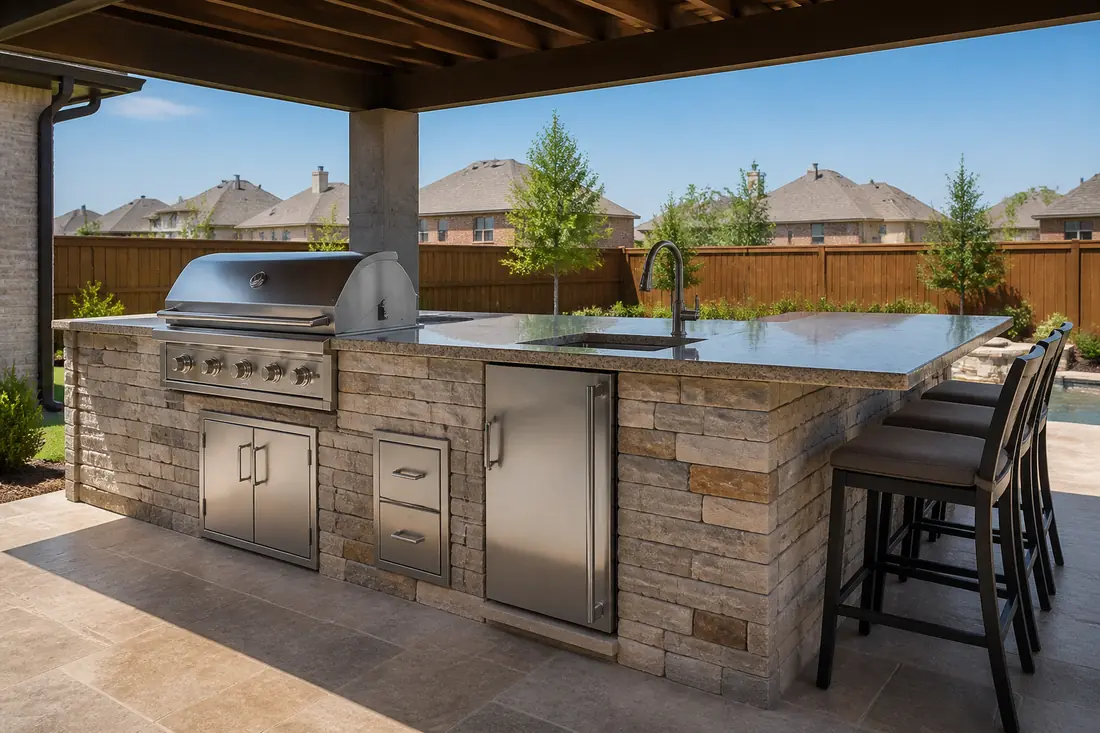
Outdoor Kitchen Construction in Frisco, TX — What to Expect
An outdoor kitchen is a small building with plumbing, gas and power in it, and most of what determines whether it lasts happens before anything visible goes up. What it sits on, how services reach it, and how water gets away from it decide more than the appliance brands do.
On Blackland Prairie clay that base question is not a formality. The soil here changes volume with moisture through the year, and a masonry structure set on a slab that was not designed for that movement cracks at the joints and takes the countertop with it. That is the single most common reason an outdoor kitchen looks wrong three years in.
What Is Included
- Base and slab designed for the soil rather than poured to a standard thickness
- Gas, electrical and water routes established before layout is fixed
- Appliance dimensions confirmed before the openings are built
- Counter overhangs and working heights set around how it will be used
- Drainage away from the structure and the house detailed as part of the build
The Outdoor Kitchen Construction Process
- 1
Step 1: Work Out How It Will Actually Be Used
Who cooks, how many people are usually there, and whether this is a grill with counter space or a kitchen someone prepares in. That decides the footprint before any appliance is chosen.
- 2
Step 2: Establish the Base and the Services
What the structure will sit on, and where gas, power and water come from. Both are settled on paper — running a gas line after the masonry is up means cutting into finished work.
- 3
Step 3: Confirm Appliances and Build the Openings to Them
Cut-out dimensions come from the actual appliances, not from a catalogue category. Openings built to a generic size are the reason a grill sits proud or a door will not clear its frame.
- 4
Step 4: Build, Set Counters and Commission
Masonry built, counters templated and set once the structure is complete rather than to drawings, then gas and electrical connected, tested and left working.
Types of Outdoor Kitchen Construction in Frisco
Grill and Counter Runs
The most common build: a built-in grill with counter either side and storage below, which covers most of how an outdoor kitchen is actually used.
Full Outdoor Kitchens
Cooking, refrigeration, sink and preparation space in one structure, where drainage and water supply have to be planned rather than added.
L-Shaped and Island Layouts
Configurations that separate cooking from serving, or put a bar on the far side, which changes both the services routing and the working clearances.
Kitchens Under an Existing Cover
Building into a patio cover or pergola that is already there, where ventilation above a grill and the existing structure both constrain the layout.
What Matters When Choosing a Outdoor Kitchens Contractor in Frisco, TX
Built on a base that suits Blackland clay
The soil here swells and shrinks with moisture, and a masonry kitchen set on an inadequate base moves with it. What the structure sits on gets decided before anything about the appliances does.
Gas, power and water planned before the block goes up
Running services after a kitchen is built means cutting into what was just finished. Where the lines come from and how they get there is settled at design, not discovered at installation.
Materials chosen for a North Texas summer
Dark stone reaches temperatures that make a counter unusable in August, and some finishes fade under this sun far faster than a showroom sample suggests. Material choice gets talked about in those terms.
HOA and permitting handled as part of the job
Most of the master-planned communities here have architectural review, and gas and electrical work is permitted. Which approvals apply is established before a scope is priced.
Outdoor Kitchen Construction FAQs
Does an outdoor kitchen need its own foundation in North Texas?
It needs a base designed for the soil, which here means designed for movement. Blackland Prairie clay swells and shrinks through the year with moisture, and a masonry structure on a slab that was not built for that will crack at the joints and take the countertop with it. Whether that means a thickened slab, piers or something else depends on the site, and it is worth settling before the layout rather than after.
Can an outdoor kitchen be added to an existing patio?
Often, yes — but the existing slab is the question rather than a given. What matters is how thick it is, what it sits on, and whether it has already moved. A slab poured for foot traffic is not necessarily one that will carry masonry and appliances without cracking. That gets checked first, and where it will not serve, building the base is part of the project rather than a surprise partway through.
Other Services in Frisco
- Commercial and Amenity KitchensOutdoor kitchens and grilling stations for amenity decks, clubhouses, apartment communities and hospitality.
- Outdoor Electrical and LightingCircuits, outlets and task lighting for an outdoor kitchen, installed to the requirements for wet locations.
- Gas Line InstallationRunning and sizing the gas that feeds a grill, fire feature or heater, by the licensed trade.